Joan Brown
American, 1938–1990
About Joan Brown
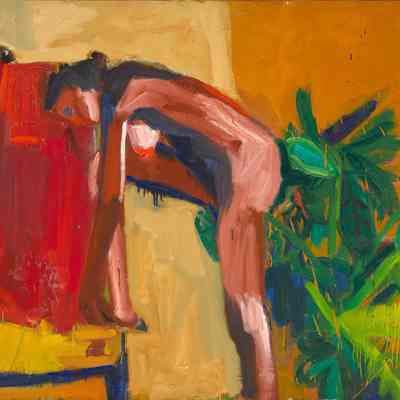
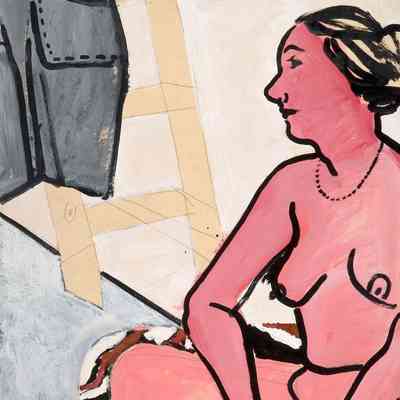
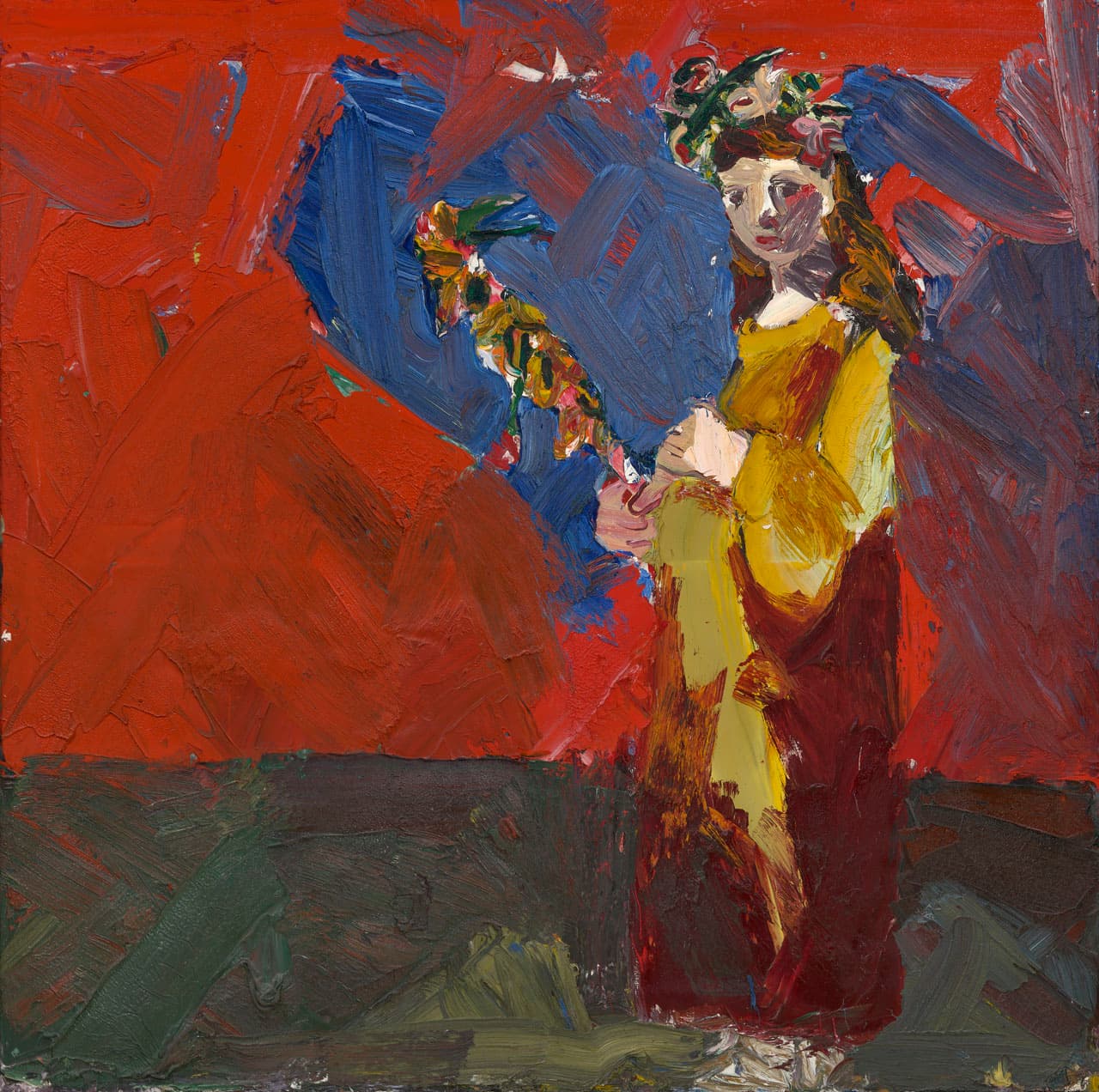
Joan Brown (née Beatty) was born in San Francisco in 1938. She grew up in a multigenerational home, sharing the dining room with her grandmother as their bedroom. She attended a Catholic high school and initially enrolled at Lone Mountain College, a Catholic College. After seeing an advertisement for the California School of Fine Arts (later San Francisco Art Institute) in the paper, she visited the campus and decided to enroll in 1955. Brown’s first year was difficult, and she felt as though she had no talent or skill at making art, yet during the spring semester, she met fellow student William “Bill” Henry Brown, whom she would marry in 1956, and the two enrolled in a summer course together. There she took landscape painting with Elmer Bischoff, who became her longtime mentor, and threw herself fully into painting. Brown completed her BFA in 1959 and MFA in 1960, just as the school rebranded as San Francisco Art Institute. Her early work was typically figurative and composed of thick impasto like many other second-generation Bay Area Figurative artists.
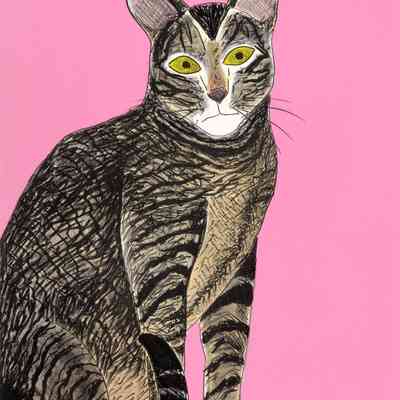
She divorced Bill Brown and in 1961 married the artist Manuel Neri and gave birth to their son, Noel. After divorcing Neri in 1966, she married the artist Gordon Cook in 1968. The couple moved to Rio Vista in 1970, and she briefly taught at Sacramento State University before moving back to the Bay Area to teach at Mills College. Around this time, Brown’s work began to shift in both material and imagery toward representations of the self, using human figures and animals. Her paintings’ flat surfaces were created with oil-based enamel paints, which she appreciated for their pre-mixed colors, liquidity, and quick-drying nature.
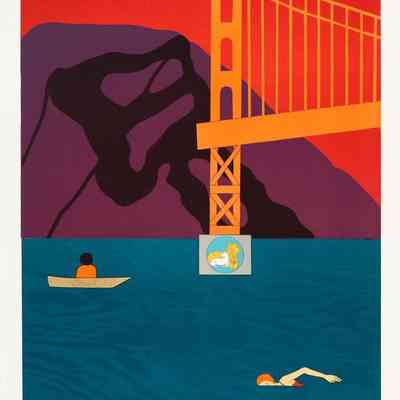
In 1975, Brown had a near-death experience while participating in an all-women swim from Alcatraz Island to San Francisco. The waters were rougher than initially anticipated, and a mix-up with the coast guard allowed a freight ship to pass through the path of the swimmers. Large waves in the frigid waters made it so many of the swimmers, Brown included, were pulled from the water rather than finishing the race. This experience made its way into her work in the form of swimmers, rough waters, and depictions of Alcatraz.
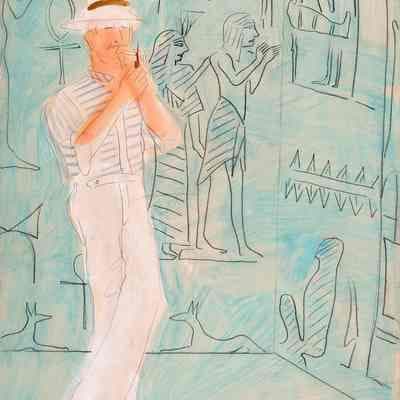
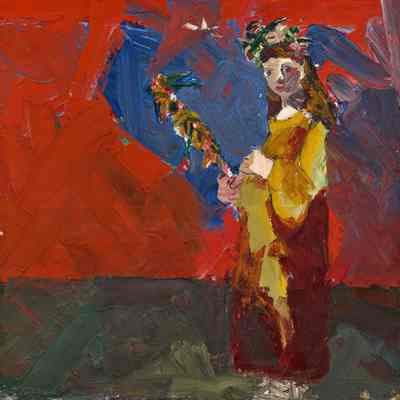
Brown joined the faculty at University of California, Berkeley, in 1974, where she would remain for the rest of her career. After her divorce from Cook in 1976, she began to look toward ancient civilizations and spiritualism in her work and life. Brown was awarded a Guggenheim Fellowship for Fine Arts in 1977. In 1980, Brown married police officer Mike Hebel and in the late 1970s and 1980s, she spent time traveling abroad and started to work on more public artworks, including a set of pyramids and cats that were installed at Sacramento’s Arden Fair Mall. In 1990, while installing an obelisk at Sai Baba's Eternal Heritage Museum in Puttaparthi, India, the turret on the floor above the installation collapsed, killing Brown and two of her assistants.
Notes:
Oral history interview with Joan Brown, 1975 July 1-September 9. Archives of American Art, Smithsonian Institution.
https://www.aaa.si.edu/collections/interviews/oral-history-interview-joan-brown-13063
Shields, Scott A., ed. The Crocker Art Museum collection: unveiled. Crocker Art Museum, 2010.
Wikipedia contributors, "Joan Brown," Wikipedia, The Free Encyclopedia, https://en.wikipedia.org/w/index.php?title=Joan_Brown&oldid=1314100660 (accessed October 2, 2025).