Oceanic Art
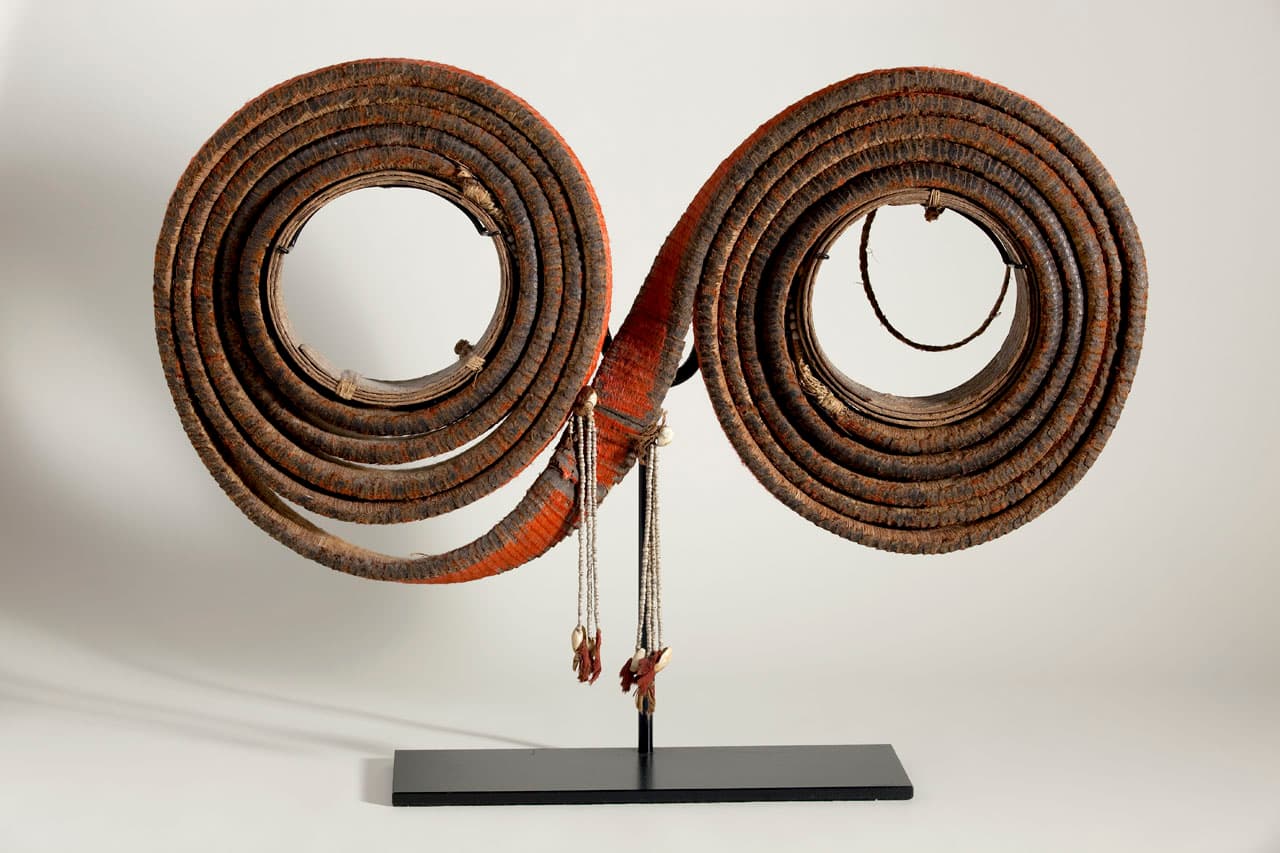
The Crocker’s collection of sculpture, pottery, textiles, and paintings from Africa, Oceania, and the Americas, brings together work form many geographic and cultural regions. The collection spans four continents and features a wide array of objects that demonstrate the craftsmanship, histories, and rich traditions of these artists and cultures.
About the Oceanic Art Collection
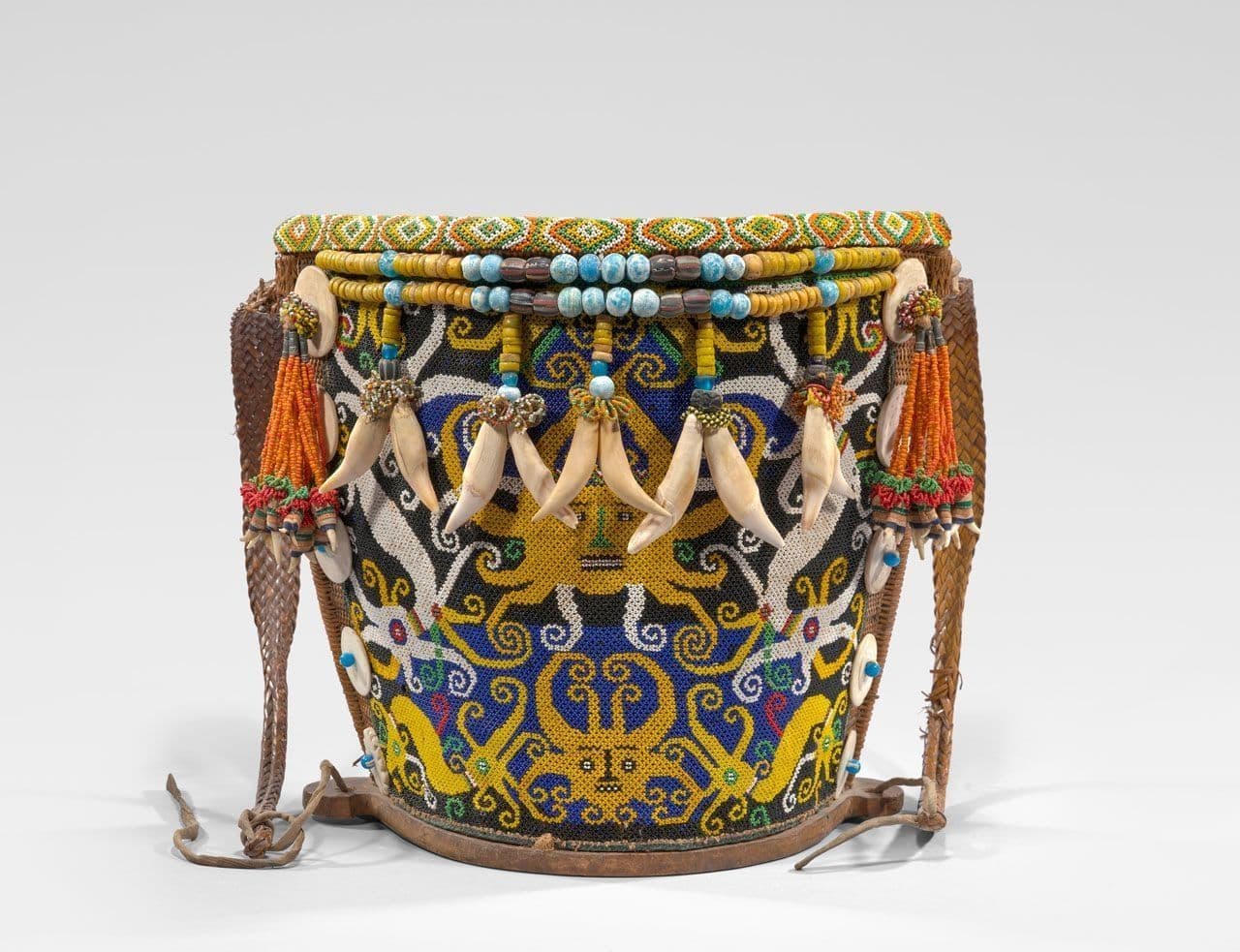
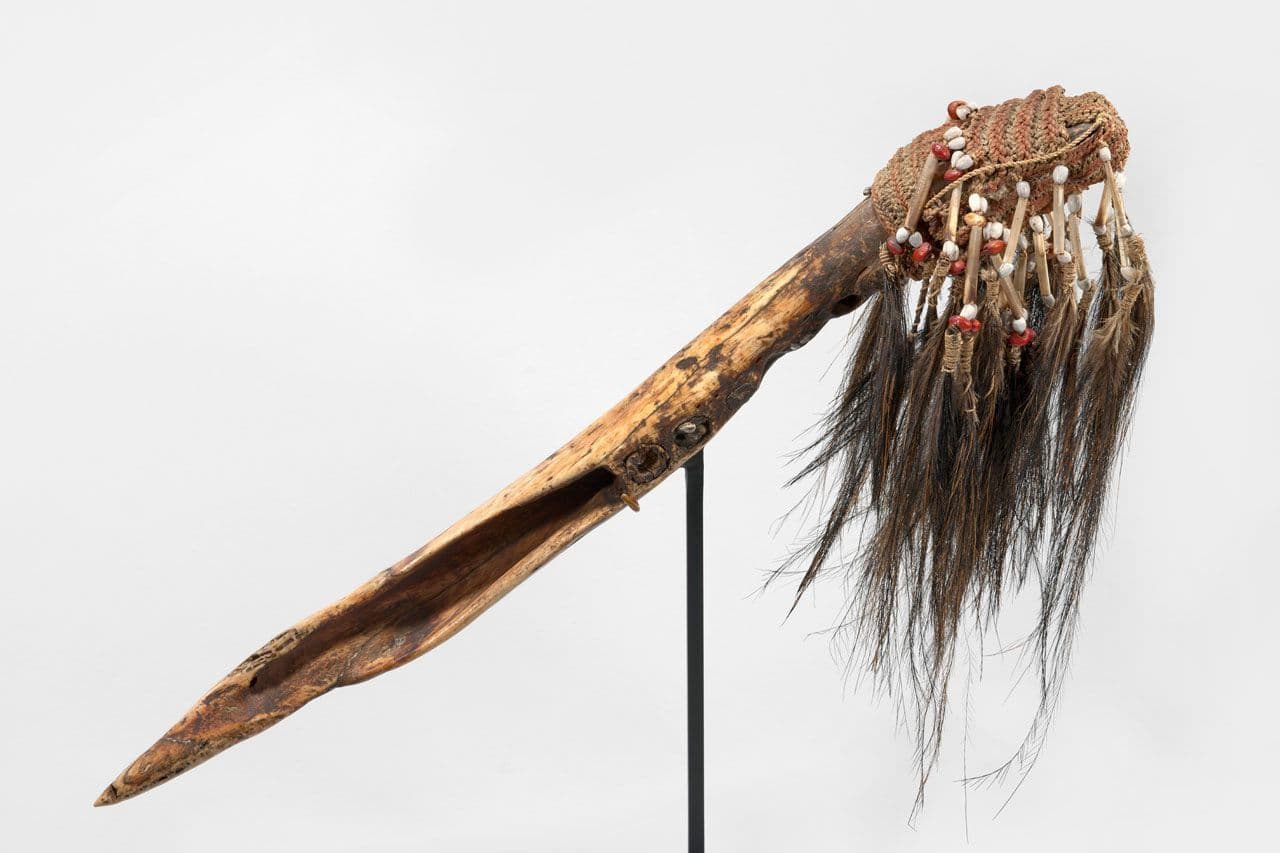
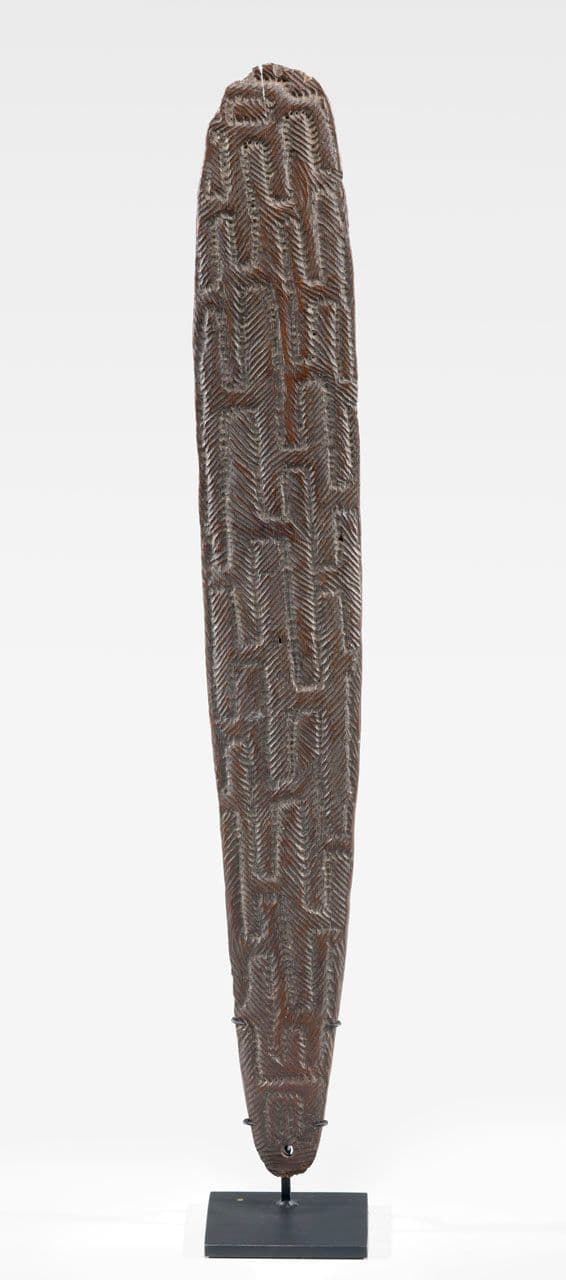
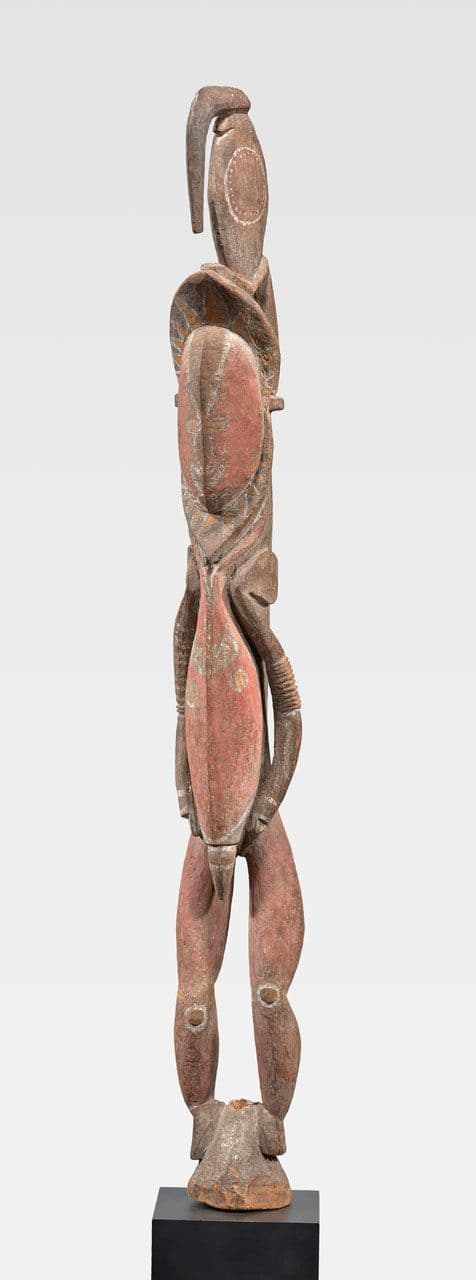
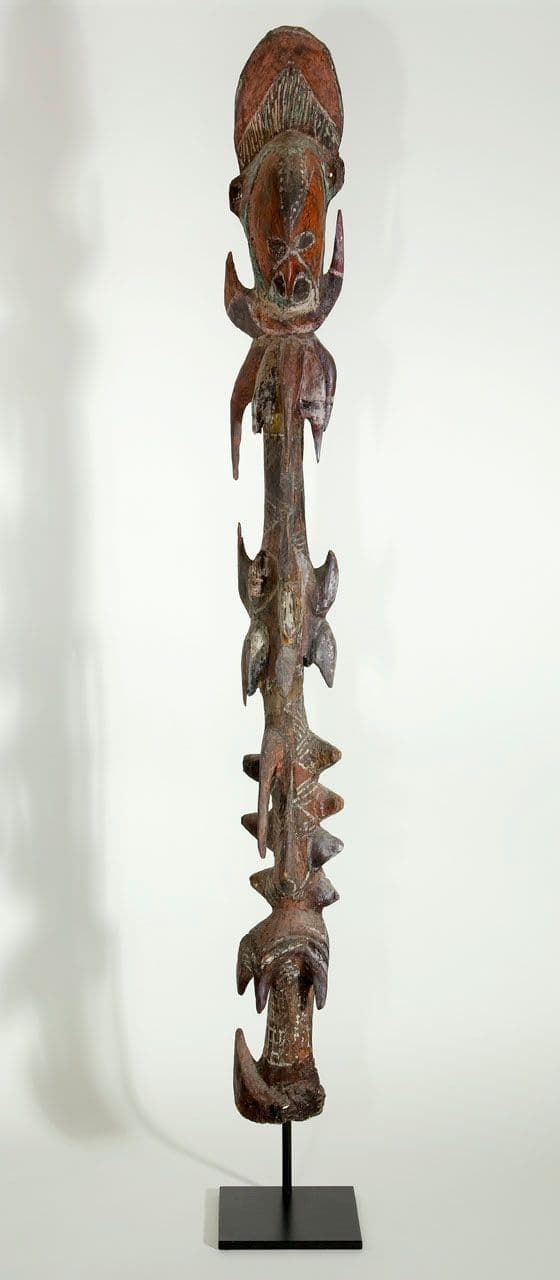
Made up of thousands of islands spread throughout the Pacific Ocean, Oceania and island Southeast Asia are home to hundreds of distinct languages and cultures. Tied to the diverse geography of the region, which includes dense rainforests, mountainous regions, sandy atolls, and the sea itself, the visual cultures of Oceania hold strong connections to place and materials, such as wood, fiber, feathers, and shells. The Crocker began collecting work from Oceania with the acquisition of a large gift in 2009 that included examples of sculpture from the Asmat people, who occupy the southern coastal rainforest of the island of Papua New Guinea, and the Abelam people from the more mountainous highlands. These works included monumental bis poles made for funerary feasts, and ceremonial shields and drums. The collection has grown to include figures representing fertility and ancestral power, elaborate featherwork pieces, decorative paddles, canoe prows, costumes, ceremonial staffs, and other architectural fragments from areas including what is now Indonesia, Papua New Guinea, and the Solomon Islands.
Learn More
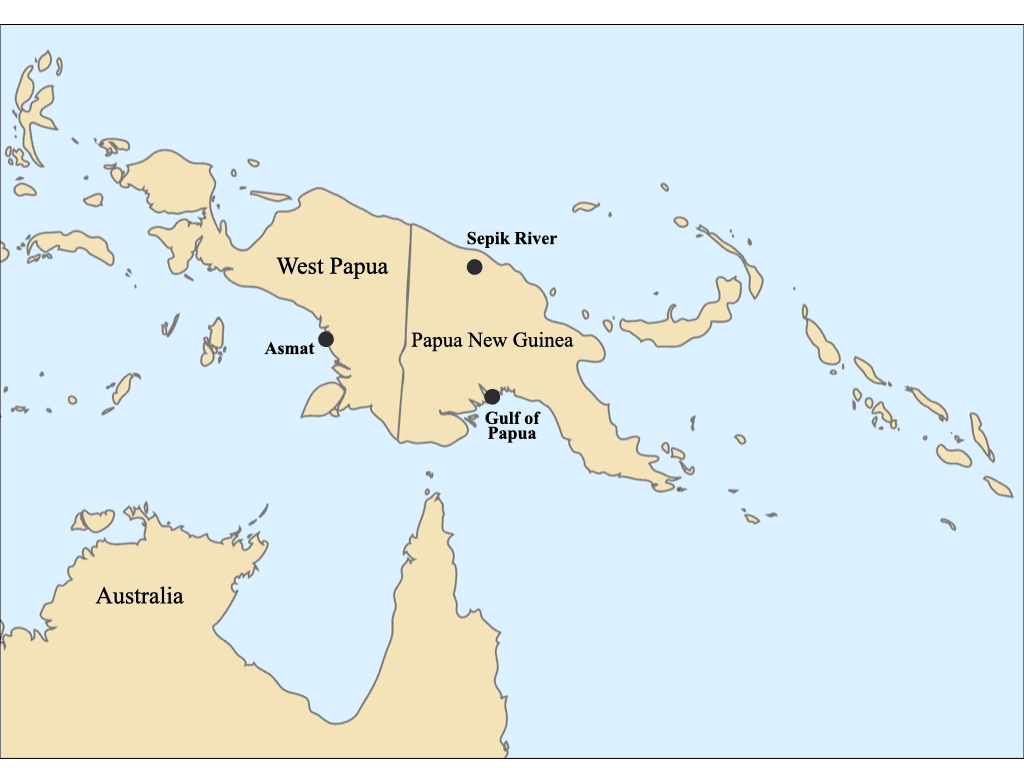
Image: A map of New Guinea showing the location of the Sepik River region, the Gulf of Papua, and location of Asmat people.
Image credit: Alex Golub, based on a map from Wikicommons | Copyright: Alex Golub
The Pacific Ocean—also known as Oceania— spans one third of the globe and is perhaps the earth's most outstanding geographical feature. The islands of Oceania are incredibly diverse, ranging from tiny coral atolls to small islands, to the large almost-continents of New Guinea and Aotearoa (New Zealand). The art of this region is equally diverse, reflecting the multitude of cultures that have been migrating, trading, and innovating in the region for tens of thousands of years. From the great kingdoms of Fiji, Hawai‘i, and Tonga to the more networked and decentralized groups in Australia and the Solomon Islands, the Pacific has a boundless diversity of culture and art. The Crocker's Oceanic collections hold items from across the region, with a special focus on the island of New Guinea.
The second largest island in the world, New Guinea is about twice as large as California. In its center is a massive mountain range that is higher than the Sierra Nevada—so high in fact, that there are still glaciers there that are left over from the last ice age. Massive rivers run from these mountains into the New Guinea lowlands before they flow out into the sea. Today an international border runs across the middle of New Guinea, dividing it into two countries. To the east is the independent state of Papua New Guinea. This region is home to the Sepik River and Gulf of Papua, two areas where many of the Crocker’s objects come from. To the west, the island is part of Indonesia and is known as West Papua. Here, the region called the Casuarina Coast is the home of the Asmat people, whose work is a central part of the Crocker's collection.
Although we call these items artworks because of their beauty, New Guineans did not make them to only be looked at— they were meant to be used. These objects were carefully crafted because of how important they were to their makers. Until the mid-19th century, New Guineans did not have access to metal and did not have a writing system. As a result, most of the objects in this collection are made of wood, bone, and fiber, and decorated with natural pigments. Most New Guineans also have darker complexions, and many Westerners would see them as Black. For these reasons, New Guinea has often been wrongly considered a “primitive” or “backwards” place.
The art on display in the Crocker is not representative of the full scope of New Guinean cultures, but reflects the intersection of that culture with collectors' interests. Many of the Crocker's artworks are associated with customs of male initiation and warfare that were once practiced in New Guinea. This reflects the centrality of warfare in New Guinea's past. We must be frank and note that this warfare often featured sorcery, headhunting, and cannibalism. But the amount of war-related objects in the collection also reflects the interests of the collectors who purchased this art. Overwhelmingly, they were white men who sought adventure in the “last unknown” amongst “stone age” people. Often, these collectors were fascinated by violence and fighting. This is why museums’ collections often feature spears and shields, but not cradles or farming tools. Clearly, New Guineans love peace and amity as much as anyone else. And obviously, of course, no one in New Guinea is a cannibal today.
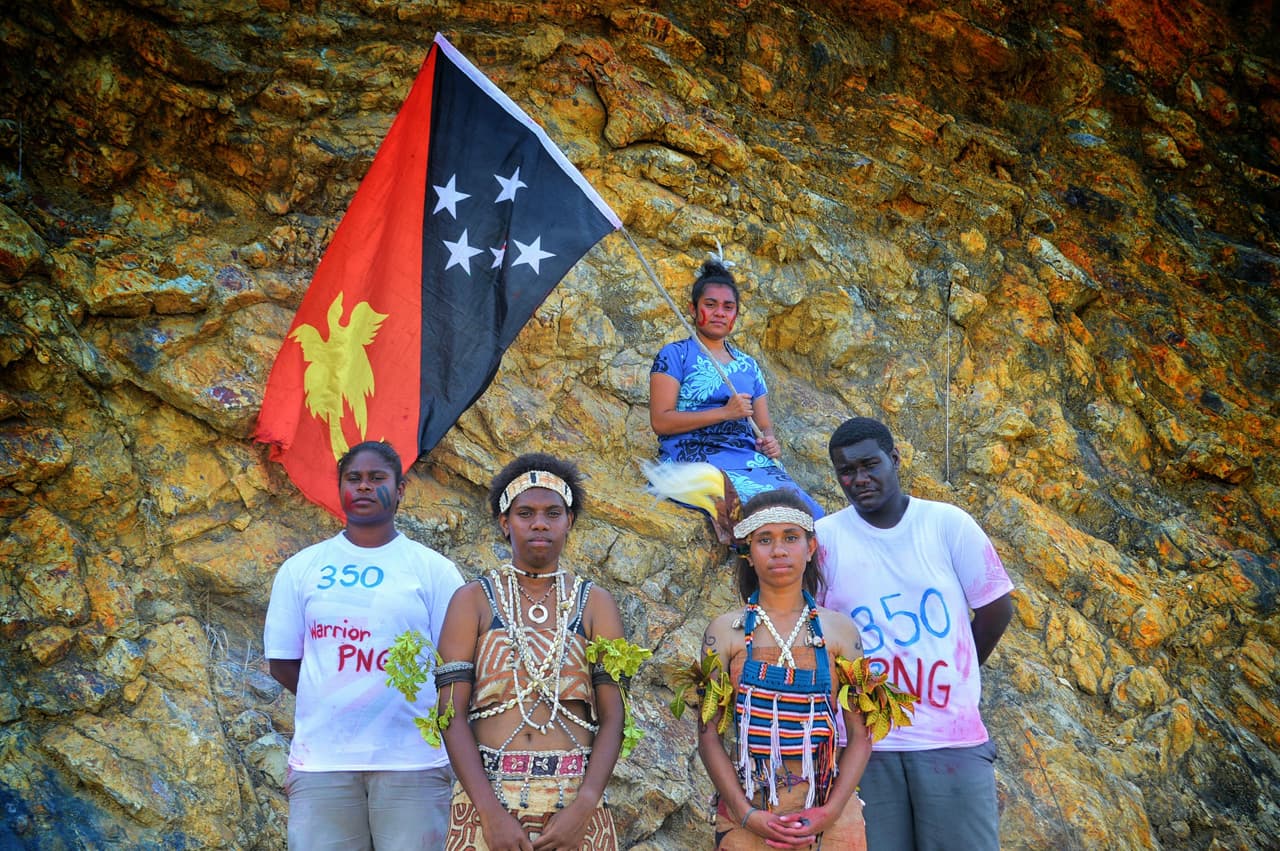
Image: Papua New Guinean members of the climate justice group 350.org raise awareness about global warming by dressing in customary adornment and holding the Papua New Guinea flag. Once stereotyped as fierce warriors, these Papua New Guineans are now proud to be 'climate warriors' fighting for the environment and a sustainable future.
Image credit: Dagia Aka | Copyright: CC BY-NC-SA 2.0
The three areas most represented in the collection come from the Sepik, the Gulf of Papua, and Asmat people of the Casuarina Coast of New Guinea.
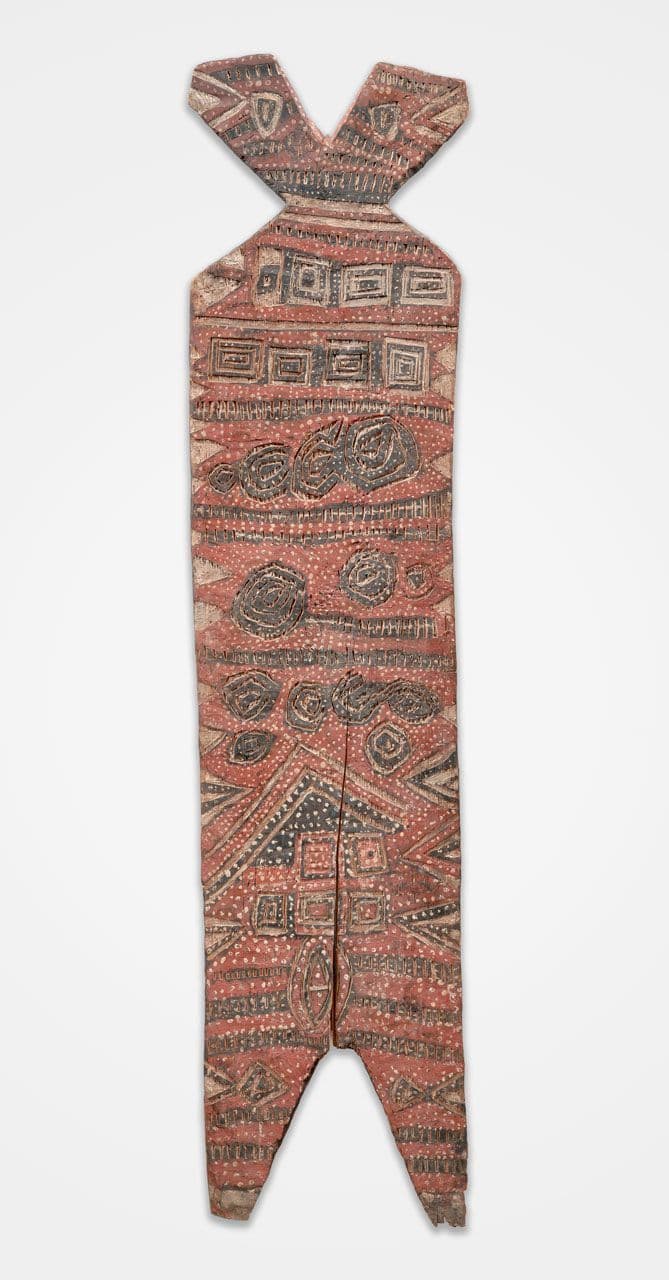
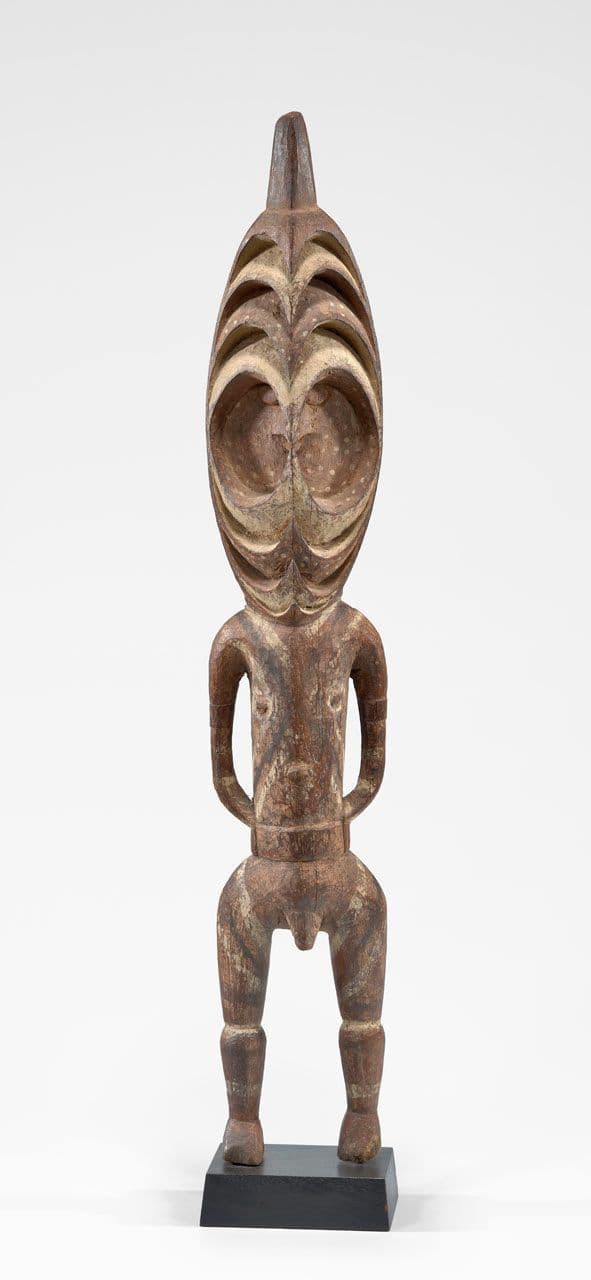
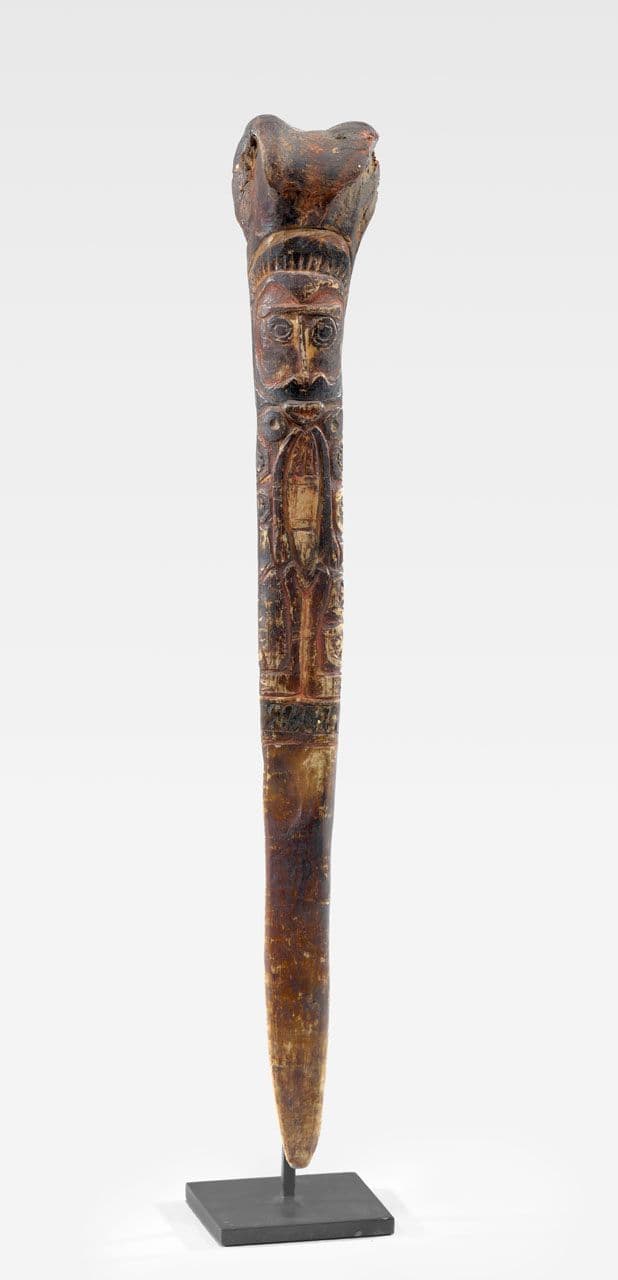
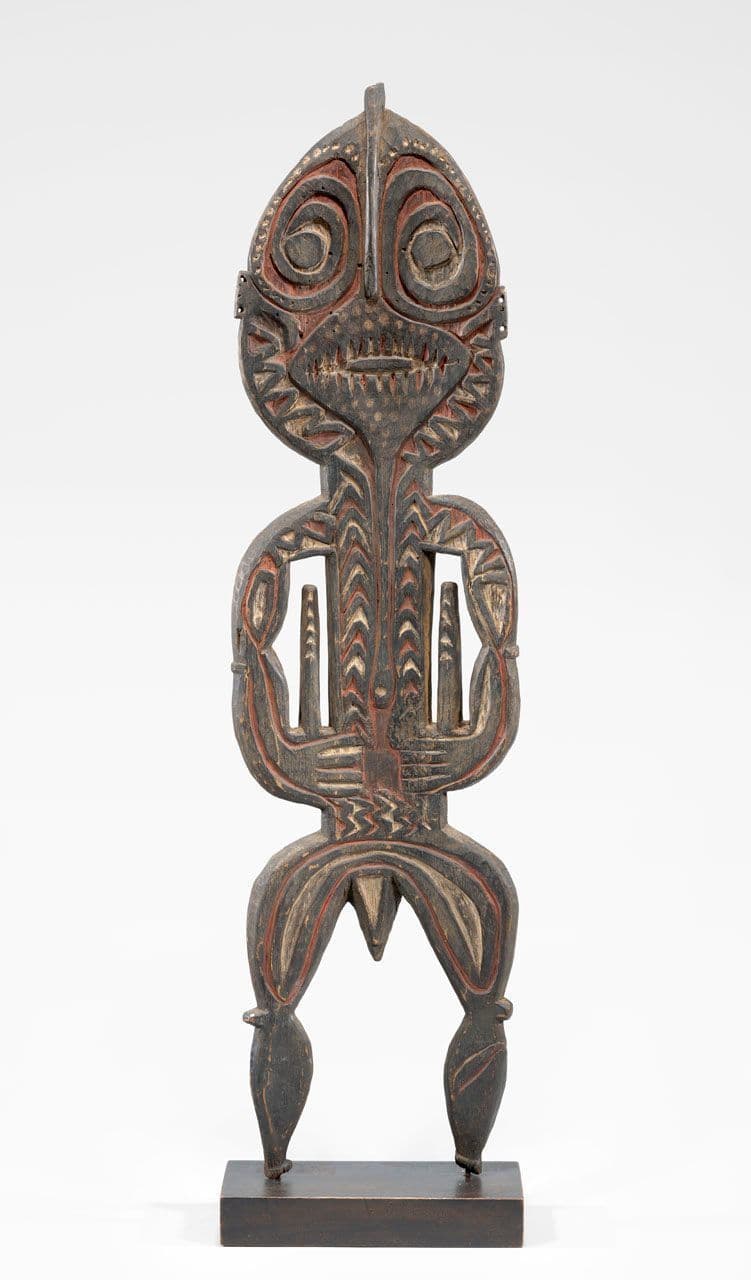
On the north coast of Papua New Guinea, the mighty Sepik River drains the central mountain ranges and flows into the sea. Along its banks, lakes, and swamps live the Abelam, Iatmul, and other Sepik peoples whose artwork is on display in the Crocker. Once, the central feature of these cultures was the men's house, amazingly large structures that were off-limits to women. Within these structures men would initiate boys into different age groups, communicate with spirits and ancestors, and compete for prestige and power. One way of attaining fame was by raiding nearby villages. Many of the Crocker's items from the Sepik were part of this warfare, such as shields and spears. Homicides (men who had killed someone) wore special items to mark their status, such as daggers made from the bones of the cassowary, a dangerous ostrich-like bird. The Crocker also has several items which represent ancestors and totemic spirits. In all of this art, we see patterns that are loosely symmetrical and filled with organic, abstracted figures and motifs that suggest human and animal forms.
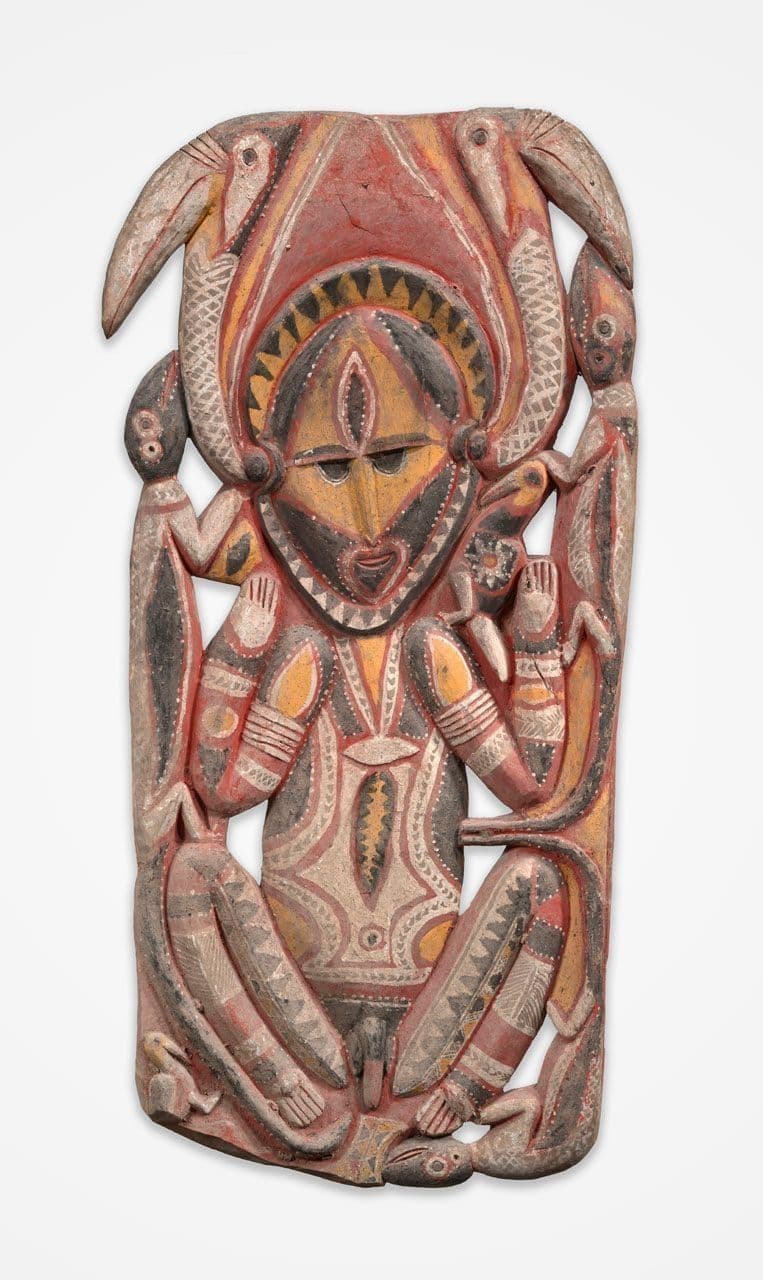
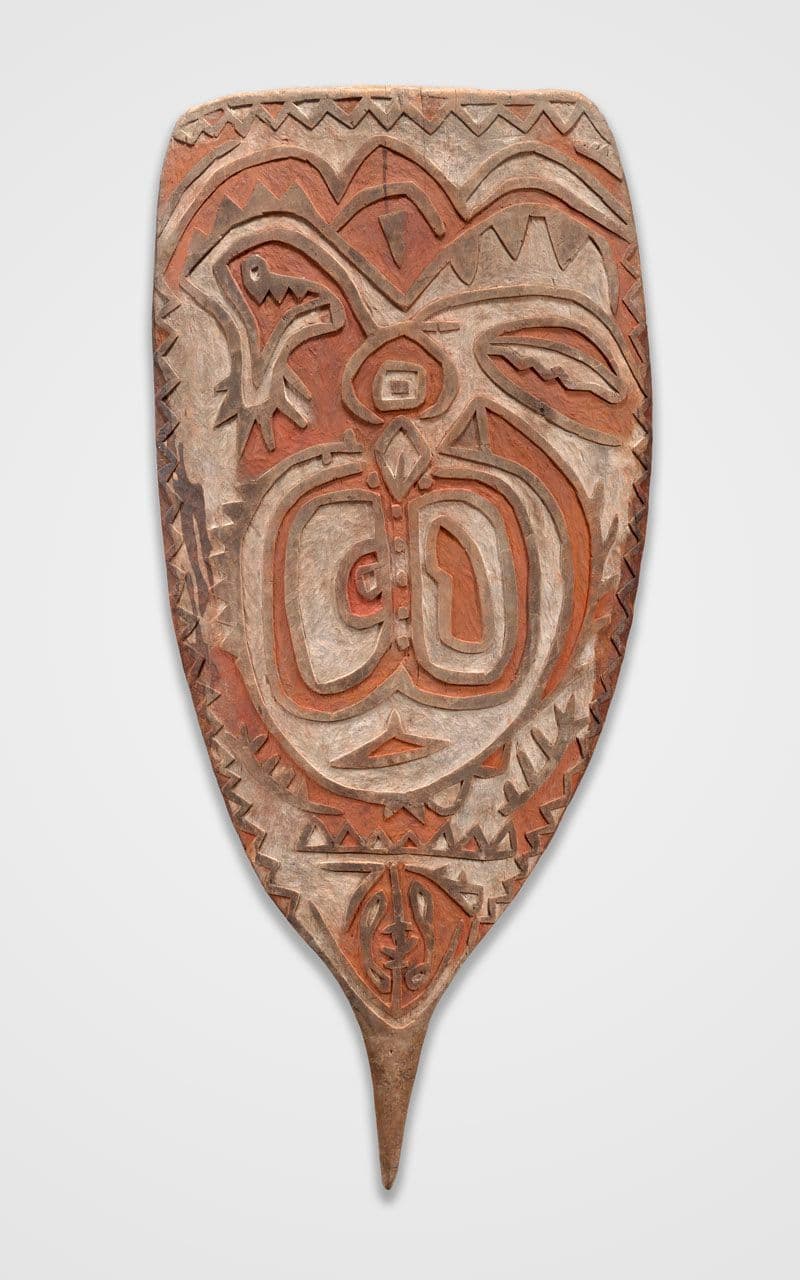
On the Southeast coast of New Guinea the Fly, Kikori, and other rivers come down from the highlands and flow into the Gulf of Papua. Many pieces of art in the Crocker come from this region. As in the Sepik, the men's house was a central institution in this area. Although considered primitive by some, the people of the Gulf of Papua once built longhouses that were longer than a football field and higher than a two-story building, made entirely of plant fiber and without the use of metal tools. Each family in the village had its own section of the longhouse, where the men of the family would commune with ancestral spirits at the family shrine. These spirits were represented by spirit boards or gope boards which depicted— and sometimes housed—their ancestral or totemic spirits. The Crocker has more than one of these spirit boards. While they vary in style most of them feature a human face, and often a belly button, which was perhaps used by spirits to enter and exit the image. These objects were not merely homes for the ancestors. They were emblems of the family group descended from their ancestors. Thus, they helped symbolize community and its continuity over time. Honoring ancestors assured ancestral favor and prosperity.
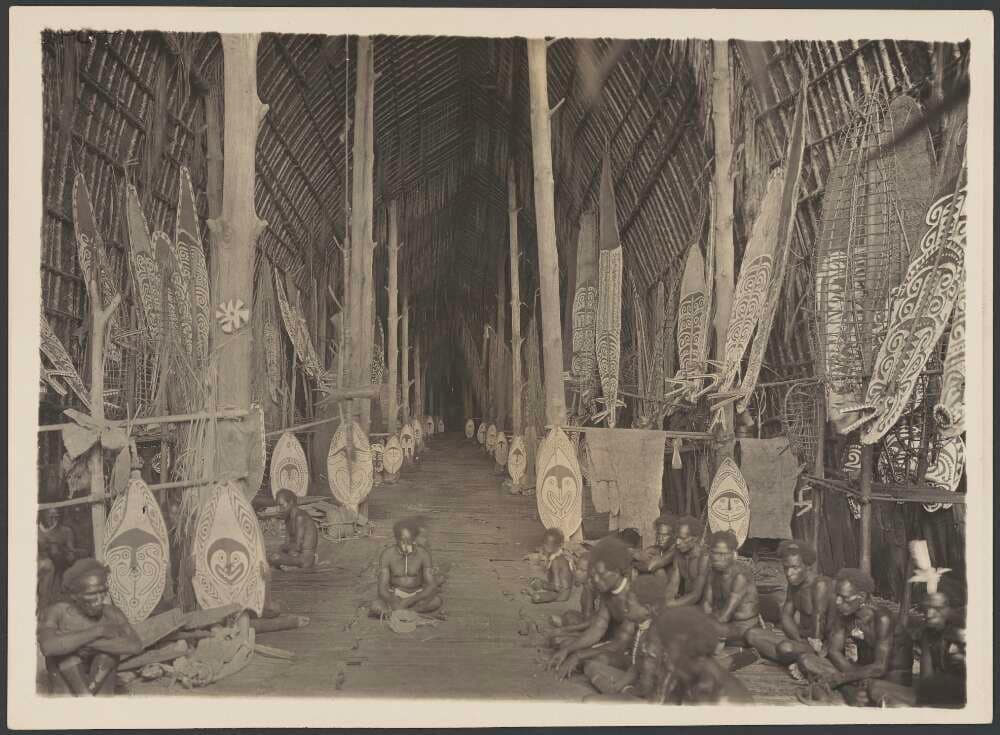
Image: The interior of a longhouse in Kaimari village on Urama island in the Gulf of Papua, circa 1922. Note the spirits boards at the entrance of each family's partition. Although considered 'primitive' to some, people in the Gulf of Papua made longhouses that could be longer than a football field.
Image credit: Frank Hurly, circa 1922.
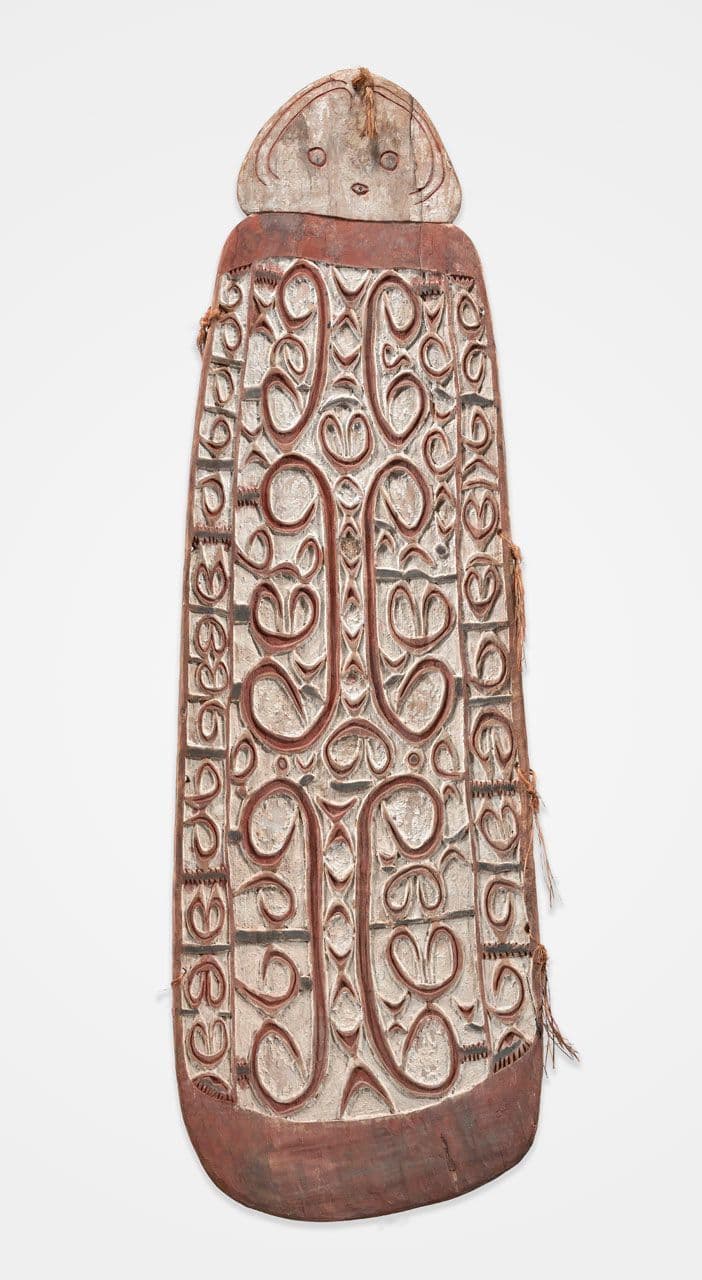
On the southwestern coast of New Guinea rivers flow down to a swampy area known as the Casuarina Coast. This is the home of the Asmat people, a major source of the Oceanic art at the Crocker. Asmat art is world famous for its beauty and its connection with warfare. Unconquered by colonial forces until after World War II, Asmat culture featured a men's house, male initiation, and warfare which included headhunting and cannibalism. As a result, Asmat weapons and shields were eagerly collected. Monumental Bis poles—commemorating recently-deceased ancestors— were also highly collected by outsiders, and some are included in the Crocker's collection. The poles were placed where the spirits of the recently-deceased could live until they moved on to the next stage of their journey. The demand for these objects was so great that immediately after warfare was outlawed, Asmat people shifted to an economy where they produced these items for sale and export.
When looking at art from New Guinea, it is tempting to try to decode its symbolism and discover its hidden meaning. To a certain extent that is possible. For instance, Asmat people often saw bats and praying mantises as symbols of warriors, since mantises decapitate their prey, and bats eat fruit the way warriors prey on their victims. But New Guinea art usually has more than one meaning. The public meaning of a symbol might be one thing, while there is a deeper meaning revealed only to men initiated into the secrets of the men's house. Then, at the deepest level, the artist themselves might have an even more private meeting for a work.
Part of the beauty of these artworks is that they can never quite be pinned down, regardless of whether you are a cultural insider or not. They invite you to respond to them and seem to urge their viewer to create their own, novel interpretations of their meaning. Often, you cannot tell which design is in the foreground of the image, and which is in the background. Our eyes seem to bounce off of these objects, and then when we concentrate on them we see not one clear image, but four or five different ways of looking at them. Ambiguity and mystery is part of their appeal.
European explorers were impressed by the obvious beauty and sophistication of these objects. It takes just a brief glance to see there is nothing “primitive” about them. New Guineans today are proud of their artistic heritage and the world-wide audience it has attracted. Many of the objects in these collections were designed to enhance the power and influence of the people who used them. These artworks continue to achieve that goal every time visitors to the Crocker learn to respect and appreciate the cultures of Oceania.
—Alex Golub
Alex Golub is an associate professor of anthropology at the University of Hawai‘i at Mānoa, where he is a specialist on the culture and history of Papua New Guinea.